
Attention coaches, trainers, and serious athletes—
Some of the best defensive instincts aren’t developed in isolation—they’re built through connection. One of the biggest advantages I’ve had as a coach comes from being a multi-sport athlete. The footwork, awareness, and defensive discipline I learned on the basketball court now directly shape how I train baseball players—especially in the infield.
From Basketball Pressure to Baseball Precision
My AAU basketball coach was relentless about defense. We ran two-a-day practices focused on trapping, half-court pressure, and controlling momentum. It wasn’t just about effort—it was about moving as one unit, cutting off space, and anticipating the next move before it happened.
One drill always stood out: resistance band defensive work.
Back then, we didn’t have specialized equipment, so we improvised—connecting bands from gymnastics gear to keep players linked together. As one defender moved, the others had to react instantly. It forced communication, balance, and trust.
Now, there’s a tool designed specifically for this kind of training:
https://amzn.to/4vTD7kY
The Zone Defense Resistance Band Belt Trainer Kit brings that same concept to modern training, allowing athletes to build speed, coordination, and defensive awareness in a controlled, repeatable way.
Why Resistance Band Training Works
This type of training taps into kinetic energy—when one player moves, it directly influences the other. That constant tension creates:
- Faster lateral movement and reaction time
- Better communication between teammates
- Stronger body control and balance
- Instinctive positioning without overthinking
It teaches players how to feel the game, not just think it.
Translating to Baseball: Middle Infield Chemistry
Now take that same concept to the baseball field.
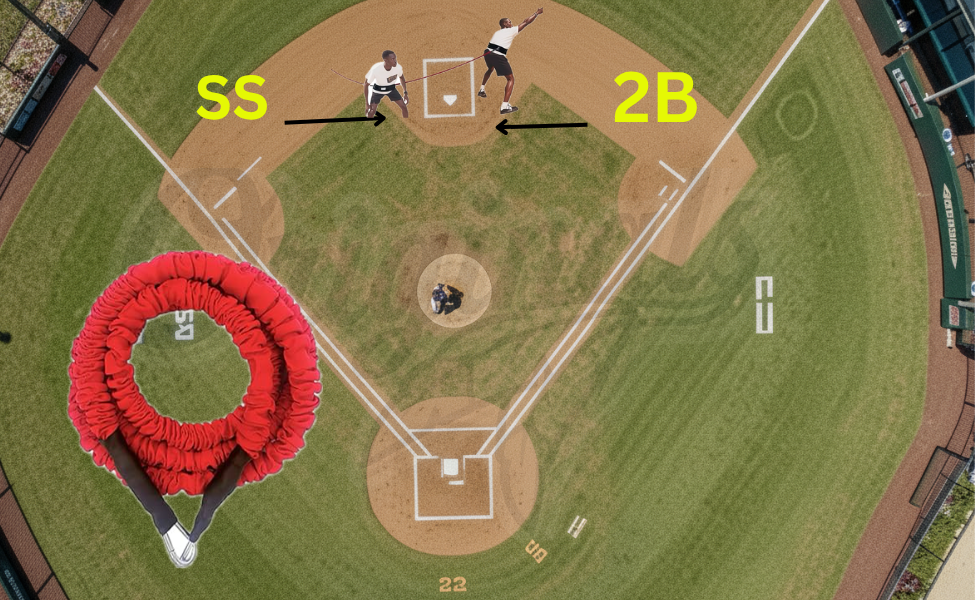
The shortstop and second baseman operate just like two defenders in a basketball zone. Every movement is connected. One shift, one step, one reaction—everything affects the other, especially when turning double plays or covering second base.
This is where resistance band training becomes a game-changer.
Resistance Band Middle Infield Drill
Setup:
- Attach the resistance belt between the shortstop and second baseman
- Position a coach at the mound
- Players start in standard infield positions
Execution:
- The coach rolls or hits ground balls to either side
- If the ball is hit to the shortstop’s pull side, the second baseman is naturally guided toward second base by the band tension
- If the ball is hit to the second baseman, the shortstop reacts and covers accordingly
- Players must stay low, maintain proper glove position, and communicate throughout
Use this training tool to run the drill effectively:
https://amzn.to/4vTD7kY
What Players Will Notice (2–3 Weeks In)
With consistent use, players begin to develop:
- Quicker first steps and improved reaction time
- Smoother transitions on double plays
- Better spacing and positioning without hesitation
- Increased confidence around the bag
The biggest difference? They stop guessing—and start anticipating.
Why This Drill Stands Out
This is one of my go-to drills because it teaches movement naturally. The resistance doesn’t just add difficulty—it guides players into the correct positions. Over time, those movements become second nature.
It mirrors exactly what great defense looks like: connected, instinctive, and controlled.
Final Takeaway
Great infield play isn’t just about individual skill—it’s about trust, timing, and connection.
By combining multi-sport training concepts with tools like the resistance band trainer, you’re giving your players more than reps—you’re giving them awareness, feel, and confidence.
Coaches, if you want your middle infield to move faster, communicate better, and control the game, start training them as a unit—not as individuals.
Stay connected. React together. Dominate the middle.